
Rabbit Secondary Antibodies


Cayman Chemical HorseradIsh PeroxIdase 5ea
An ionizable cationic lipid (pKa 5.148) LNPs containing 4-O10b1 conjUGated to an anti-F4/80 antibody and encapsulating siRNA targeting the mRNA encoding Tak1 inhibit poly(IC)-induced production of IL-1B IL-6 and TNF-a in RAW 264.7 macrophages intranasal administration of these LNPs decreases lung injury and reduces total protein levels and Mpo activity in BALF in a mouse model of influenza A-induced pneumonia

ABclonal Technology ABflo 647 Rabbit anti-Cat CD27

The protein encoded by this gene is a member of the TNF-receptor superfamily This receptor is required for generation and long-term maintenance of T cell immunity It binds to ligand CD70 and plays a key role in regulating B-cell activation and immunoglobulin synthesis This receptor transduces signals that lead to the activation of NF-kappaB and MAPK8 JNK Adaptor proteins TRAF2 and TRAF5 have been shown to mediate the signaling process of this receptor CD27-binding protein (SIVA) a proapoptotic protein can bind to this receptor and is thought to play an important role in the apoptosis induced by this receptor
ABclonal Technology ABflo 488 Rabbit anti-Cat CD27
The protein encoded by this gene is a member of the TNF-receptor superfamily This receptor is required for generation and long-term maintenance of T cell immunity It binds to ligand CD70 and plays a key role in regulating B-cell activation and immunoglobulin synthesis This receptor transduces signals that lead to the activation of NF-kappaB and MAPK8 JNK Adaptor proteins TRAF2 and TRAF5 have been shown to mediate the signaling process of this receptor CD27-binding protein (SIVA) a proapoptotic protein can bind to this receptor and is thought to play an important role in the apoptosis induced by this receptor
Immunology Consultants anti-Cat Whole Serum Antibody (Rabbit) - Antiserum
This rabbit antiserum provides broad, multi‑epitope recognition of cat whole serum proteins, supporting reliable detection in immunoassays, veterinary research, and diagnostic development. Supplied at 1 ml, it delivers consistent performance in ELISA, immunodiffusion, and general antibody‑based assays. Manufactured by Immunology Consultants, the reagent offers strong binding characteristics and dependable reactivity across a wide range of feline serum components.
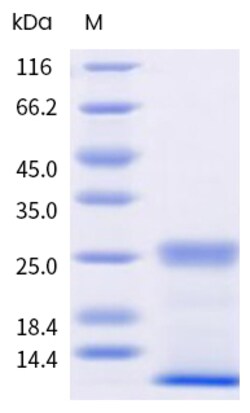
Sino Biological Recombinant Felis domesticus Fel d 1 Protein 250
A DNA sequence encoding the Recombinant Felis domesticus Allergen Fel d 1 (P30438 & P30440) (Val1-Cys193) was expressed.
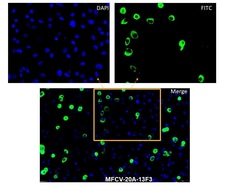
Immunology Consultants anti-Feline Calicivirus Antibody (Mouse - Clone #8B4) - Monoclonal
This mouse monoclonal antibody provides sensitive, specific detection of Feline Calicivirus (FCV), supporting ELISA, Western blotting, and antigen‑capture assay development. Clone 8B4 recognizes a defined viral epitope, enabling precise detection in clinical samples, cell culture supernatants, and purified antigen preparations. Its strong affinity and low nonspecific binding make it suitable for virology research, vaccine evaluation, and surveillance of FCV infection in feline populations. MFCV‑20A‑8B4 delivers consistent, high‑clarity performance across repeated assays and diverse sample types.

Abcam Rabbit Fab'2 Anti-pig IgG H&L HRp
Rabbit Fab'2 Anti-pig IgG H&L HRp
The product is subject to the following: Abcam Restricted Use Statement
Cell Biologics Porcine Primary Alveolar Epithelial CellsFrozen Vial
Porcine Primary Alveolar Epithelial CellsFrozen Vial
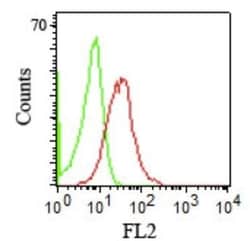
Biotium CD1b(RIV12), CF594 conjugate, 0.1mg/mL
The mouse monoclonal antibody recognizes CD1b, a 44 kDa type I glycoprotein associated with beta2-microglobulin. It is expressed on dendritic cells, Langerhans cells, thymocytes, and T acute lymphoblastic leukemia cells. The CD1 multigene family encodes five forms of the CD1 T-cell surface glycoprotein in human, designated CD1A, 1B, 1C, 1D and 1E. CD1, a type 1 membrane protein, has structural similarity to the MHC class I antigen and has been shown to present lipid antigens for recognition by T lymphocytes. Constitutive endocytosis of CD1B molecules and the differential sorting of MHC class II from lysosomes separate peptide- and lipid antigen-presenting molecules during dendritic cell maturation. CD1B is also expressed in interdigitating cells.Primary antibodies are available purified, or with a selection of fluorescent CF Dyes and other labels. CF Dyes offer exceptional brightness and photostability. Note: Conjugates of blue fluorescent dyes like CF405S and CF405M are
ABclonal Technology APC Rabbit anti-Mouse CD24 mAb
CD24 also know as heat stable antigen HSA is a P-selectin ligand involved in adhesion It is a GPI-anchored glycoprotein expressed on many types of cells including hematopoietic cells neural cells and epithelial cells CD24 is widely used to delineate stages of lymphocyte development It also binds to Siglec-10 in humans or Siglec-G in mice CD24 is frequently used as a marker to identify and isolate cancer stem cells in various cancer types
ABclonal Technology PE Rabbit anti-Mouse CD94 mAb
CD94 is a 43 39 kD C-type lectin also known as Kp43 It is present on all NK cells NKT cells and a subset of CD8-positive T lymphocytes in most mouse strains CD94 is a type-II transmembrane protein with an extracellular lectin-like domain and a short cytoplasmic tail CD94 is expressed as a disulphide-linked heterodimer with a NKG2 subunit believed to mediate signal transduction When associated with NKG2A the complex triggers inhibition when associated with NKG2C the complex triggers stimulation The receptor complex of CD94 and NKG2 receptors bind to the ligand Qa-1 and are thought to play a role in maintaining self-tolerance in developing NK cells
ABclonal Technology PE Rabbit anti-Mouse CD87 mAb
Predicted to enable enzyme binding activity protein domain specific binding activity and signaling receptor binding activity Predicted to be involved in several processes including negative regulation of apoptotic signaling pathway positive regulation of epidermal growth factor receptor signaling pathway and positive regulation of release of cytochrome c from mitochondria Is integral component of plasma membrane Is expressed in several structures including decidua early conceptus and spleen Human ortholog(s) of this gene implicated in rheumatoid arthritis Orthologous to human PLAUR (plasminogen activator urokinase receptor)
ABclonal Technology PE Rabbit anti-Mouse CD204 mAb
Enables amyloid-beta binding activity cargo receptor activity and low-density lipoprotein particle binding activity Involved in several processes including endocytosis positive regulation of cholesterol storage and positive regulation of macrophage derived foam cell differentiation Acts upstream of or within establishment of localization in cell and lipoprotein transport Located in plasma membrane Is expressed in several structures including alimentary system early conceptus limb neural tube and reproductive system Human ortholog(s) of this gene implicated in Barrett s esophagus arteriosclerosis and prostate cancer Orthologous to human MSR1 (macrophage scavenger receptor 1)
ABclonal Technology APC Rabbit anti-Mouse CD22 mAb
Enables CD4 receptor binding activity protein phosphatase binding activity and sialic acid binding activity Involved in several processes including negative regulation of calcium-mediated signaling negative regulation of immunoglobulin production and regulation of B cell proliferation Located in external side of plasma membrane and neuronal cell body membrane Is integral component of plasma membrane Is expressed in several structures including alimentary system brain hemolymphoid system gland liver and biliary system and reproductive system Orthologous to human CD22 (CD22 molecule)
ABclonal Technology PE Rabbit anti-Mouse CD40 mAb
Predicted to enable antigen binding activity protein domain specific binding activity and ubiquitin protein ligase binding activity Involved in B cell mediated immunity CD40 signaling pathway and cellular calcium ion homeostasis Acts upstream of or within several processes including defense response to other organism positive regulation of B cell activation and positive regulation of interleukin-12 production Located in external side of plasma membrane and intracellular membrane-bounded organelle Part of CD40 receptor complex Is expressed in several structures including alimentary system brain hemolymphoid system gland liver and biliary system and reproductive system Human ortholog(s) of this gene implicated in several diseases including Kawasaki disease autoimmune disease (multiple) end stage renal disease hyperimmunoglobulin syndrome (multiple) and non-Hodgkin lymphoma (multiple) Orthologous to human CD40 (CD40 molecule)